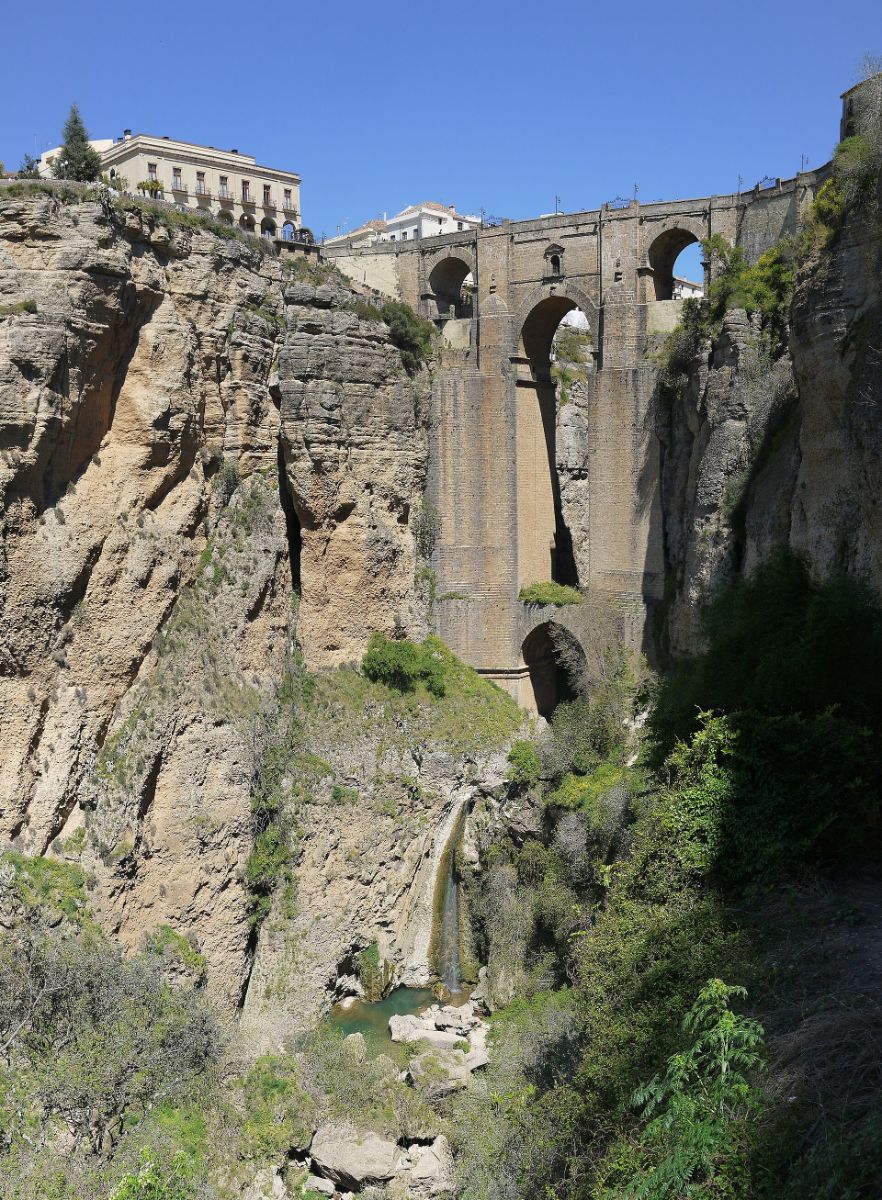
The Tajo de Ronda via ferrata climbs the wall of the gorge beneath Ronda's old town. It is short, close to the town centre and one of the few via ferratas in Andalucía set in an urban landscape. This guide covers the route, what to expect, the kit you need and how to get there from the coast.
What the route is
There are two short sections on the same gorge wall, usually called Tajo de Ronda I and Tajo de Ronda II (also known as La Sevillana). Their starts are about 40 metres apart and their exits are a few metres from each other, so they can be climbed one after the other, or one used to go up and the other to come down.
The metalwork follows access built in the 1920s for workers at a hydroelectric plant in the gorge. Much of it is steel rungs set into rock and masonry, and you pass drainage pipes and old water-mill structures on the way. The climb looks out over the Guadalevín river and towards the Puente Viejo.
Grade, length and time
Published grades vary. All sources place both sections in the easy range, between K1 and K2:
- Spain's official tourism portal lists Tajo de Ronda I at K2, about 74 m of route and 56 m of ascent, roughly 40 minutes; and Tajo de Ronda II at K2, about 75 m of route and 50 m of ascent, roughly 30 minutes.
- Málaga City Council's youth programme describes section I as K1, a good introduction, and section II as longer and more demanding, K2.
- The Via-ferrata.de route database grades section I at KS2 and section II at KS1. One 2026 reviewer there considered section I harder than its sign suggests.
In practical terms: two short, steep sections, each with roughly 75 to 80 m of cable and 50 to 60 m of height gain. Allow time for the walk in and out as well as the climbing itself.
Check the status before you go
Sections can close for maintenance. A review on Via-ferrata.de dated November 2024 reported that section II (La Sevillana) had been closed since May 2023, while section I was open. No official confirmation of the current status was found, so check locally before travelling.
What to expect
Access is on foot. The approach described in the route database follows the GR-141 and GR-249 waymarked trails past the old Los Molinos power station, through the Puerta del Viento and down steps into the gorge through the Puerta de los Molinos. The start is about 10 minutes from the signpost.
The same source advises parking outside the old town: vehicle access there is restricted to certain times and spaces are few.
The climbing is mostly vertical on rungs. The exposure is real but short. Arms tire on sustained rung sections, so push with your legs and keep your weight over your feet.
When to go
No official source sets a season for this route. General via ferrata rules apply:
- Rock and steel heat up in direct sun. In summer, start early.
- Do not climb when a thunderstorm is forecast. Steel cables and rungs conduct lightning.
- Rungs and polished rock are slippery when wet.
- Check the weather forecast on the morning of the climb, not the night before.
What to bring
Technical kit, as recommended by the British Mountaineering Council:
- Climbing helmet.
- Harness, sit or full body.
- Purpose-made via ferrata lanyard set with energy absorber, to EN 958. UIAA 128 is an optional higher standard. Never use ordinary slings.
- Karabiners marked with a K in a circle (Klettersteig).
- Gloves to protect your hands on cable and rungs.
If you book a guide, confirm in writing which technical kit is provided. Bring your own:
- Trainers or approach shoes with good grip.
- Long trousers or hard-wearing shorts.
- Water, a snack and sun protection.
- A small backpack that will not snag on the cable.
Safety basics
- Stay clipped to the cable at all times. Move one karabiner at a time past each anchor.
- With a Y-configuration lanyard, both arms may be clipped. With a V-configuration lanyard, only one arm should be clipped during normal progress; clipping both can stop the energy absorber working.
- A lanyard does not stop a fall from happening. It limits the force. Move deliberately.
- Leave one cable section between you and the climber ahead.
- If you are new to via ferrata, go with a qualified guide.
Getting there
From the Costa del Sol
The A-397 climbs about 50 km from San Pedro de Alcántara to Ronda, with continuous hairpins and few safe places to overtake. Heavy rain in March 2025 swept away part of the road, including part of a viaduct; it reopened as a single lane under traffic lights in July. Check current road conditions before setting off.
From Sabinillas and Manilva, the A-377 inland via Casares and Gaucín is an alternative.
From the Campo de Gibraltar
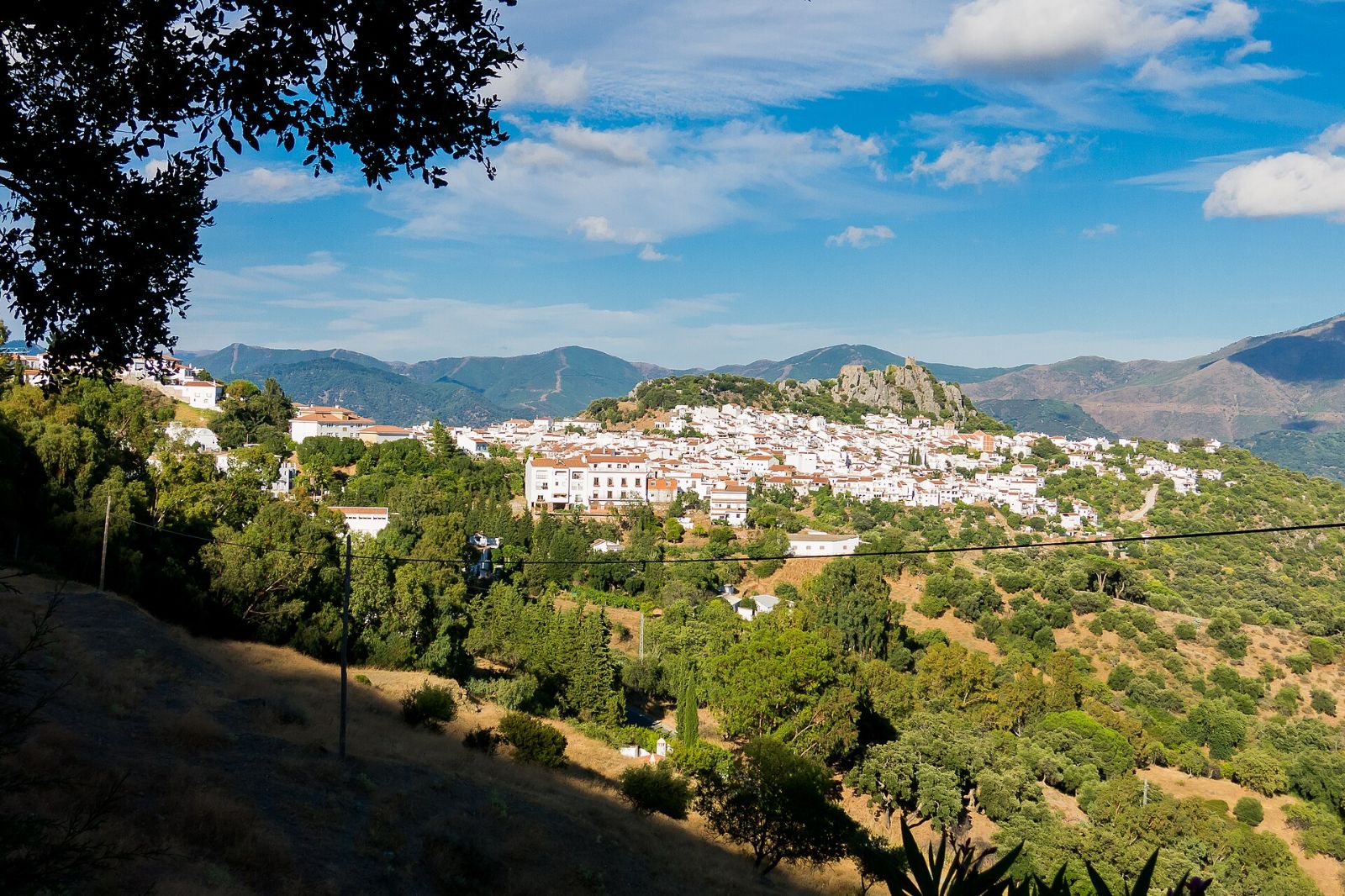
Ronda is on the railway line from Algeciras, which follows the Guadiaro valley. Journey times are roughly 1 h 30 from San Roque and 1 h 45 from Algeciras. By road, Ronda can also be reached through Gaucín.
Guided trip with James
James Daniel Holman is a professional rescue trainer, former firefighter and EMT, via ferrata guide and climber, based in San Roque. He runs the Tajo de Ronda as a half-day guided trip:
- Group: €70 per person, minimum 5 people.
- Private: €290 for 1 to 2 people, plus €50 per extra person, up to 6.
Details and booking are on the via ferrata page.