Choosing a first aid course is not about picking the longest or the cheapest. It starts with a question every employer has to answer: what could happen here, and who will be ready to deal with it? This guide sets out what the UK, Spain and Gibraltar require, and how each course fits.
Start with a first aid needs assessment
In the UK, the Health and Safety (First-Aid) Regulations 1981 require first aid provision that is adequate and appropriate in the circumstances. HSE expects employers to assess their needs by looking at the workplace, the workforce and the hazards.
HSE's guidance L74, First aid at work (third edition, 2013, amended in 2018 and 2024), explains how to do this. The 2024 update added consideration of employees' mental health to the needs assessment and simplified how employers decide what to provide.
The assessment tells you how many trained people you need, at what level, and what equipment and facilities should be in place. HSE gives employers the flexibility to choose the level of training that fits their business need.
Appointed person or first-aider?
HSE distinguishes between two roles:
- An appointed person manages first aid arrangements, looks after equipment and calls the emergency services. HSE states that an appointed person does not need first aid training and should not give first aid they have not been trained for.
- A first-aider has been trained by a competent training provider in first aid at work, or in another level of training identified by the needs assessment.
EFAW or FAW?
Emergency First Aid at Work (EFAW) is the one-day course. HSE says it enables a first-aider to give emergency first aid to someone injured or taken ill at work, and that completing it allows a person to act as a first-aider in the workplace.
First Aid at Work (FAW) includes the EFAW syllabus and also equips the first-aider to deal with a range of specific injuries and illnesses. HSE states that FAW training should be conducted over a minimum of three days.
As a rule of thumb, the more varied or serious the hazards identified in your assessment, the stronger the case for FAW. The decision should come from your own assessment, not from a general rule.
Certificates and refreshers
HSE states that first aid at work certificates last for three years. Before they expire, first-aiders need to complete a requalification course.
HSE also strongly recommends annual refresher training to keep basic skills current. It is not a legal requirement, but skills such as CPR fade without practice.
What Spain requires
Ley 31/1995 de Prevención de Riesgos Laborales, article 20, requires employers to analyse possible emergencies and adopt the necessary measures for first aid, firefighting and evacuation. They must designate the staff responsible, and those staff must have the necessary training, be sufficient in number and have suitable equipment.
Real Decreto 486/1997, Anexo VI, sets out first aid materials and rooms:
- Every workplace must have, as a minimum, a portable first aid kit, checked regularly and restocked when items are used or expire.
- Workplaces with more than 50 workers must have a room for first aid, with at least a first aid kit, a stretcher and drinking water.
- Workplaces with more than 25 workers must also have one where the labour authority requires it, based on the hazards and the distance to the nearest medical centre.
What Gibraltar requires
In factories covered by Gibraltar's Factories Act, section 51 requires a first aid box or cupboard of the prescribed standard, readily accessible, with an additional box for every further 150 people employed over 150. Where more than 25 people are employed, the person in charge of each box must be trained to the prescribed standard in first aid treatment and readily available during working hours.
Which course do you need?
James Daniel Holman delivers the following courses in Gibraltar, Cádiz and on clients' sites. Successful candidates receive a ProTrainings certificate.
- Emergency First Aid at Work (1 day, €110 per person): for lower-hazard workplaces, or as part of a mix where the assessment allows.
- First Aid at Work (3 days, €280 per person): for workplaces where the assessment points to a wider range of injuries and illnesses.
- First Aid Refresher (half day, €70 per person): keeps skills current between full courses. It does not replace requalifying before a certificate expires.
- Paediatric First Aid (2 days, €220 per person): for people who look after babies and children, such as nursery staff, childminders, schools and parents.
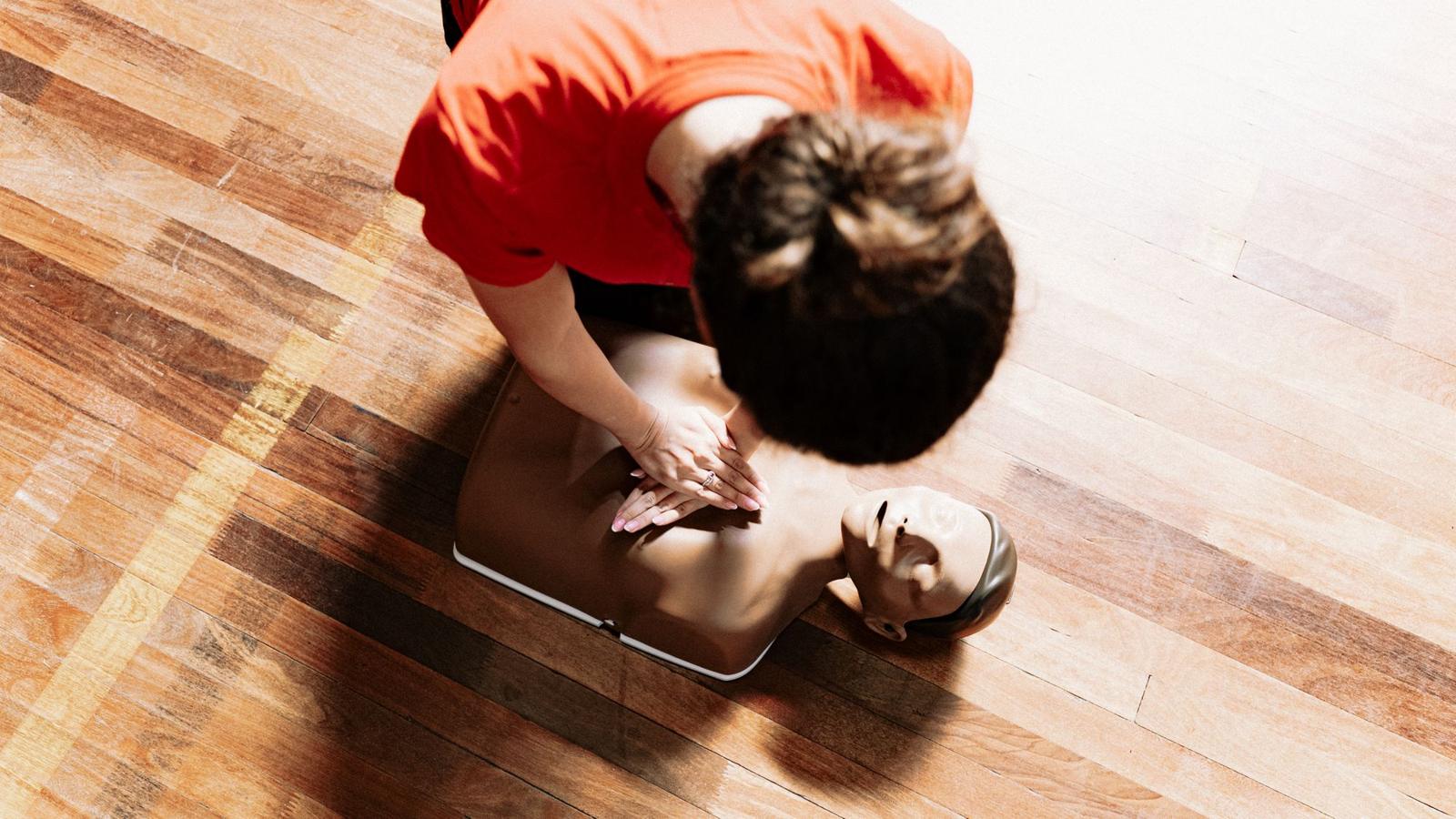
- CPR and AED (4 hours, €75 per person): focused training in cardiopulmonary resuscitation and the use of a defibrillator.
- First Responder and Trauma (2 days, €290 per person): for people in higher-risk or remote roles who want deeper training in managing serious injury until help arrives.
Courses run for a minimum of six people.
Practical tips
- Write your needs assessment down and review it when staff, shifts or work change.
- Plan for absences, shift patterns and remote work, not just the normal working day.
- Track certificate expiry dates and book requalification before they lapse.
- Match training to real hazards: workshops, kitchens, boats, height work and lone working all raise different risks.
James is a professional rescue trainer, former firefighter and EMT, and ProTrainings instructor. He teaches first aid alongside rescue, fire and working at height, so scenarios reflect real workplaces.
This is general guidance, not legal advice.
See dates and details on the first aid courses page.